×

The Standard e-Paper
Kenya’s Boldest Voice
 The Standard Group Plc is a
multi-media organization with investments in media platforms spanning newspaper
print operations, television, radio broadcasting, digital and online services. The
Standard Group is recognized as a leading multi-media house in Kenya with a key
influence in matters of national and international interest.
The Standard Group Plc is a
multi-media organization with investments in media platforms spanning newspaper
print operations, television, radio broadcasting, digital and online services. The
Standard Group is recognized as a leading multi-media house in Kenya with a key
influence in matters of national and international interest.

Audio By Vocalize

The construction sector is slowly adjusting to the import levy imposed on cement clinker, with the latest data showing an increase in tonnage by 82 per cent in 2025.
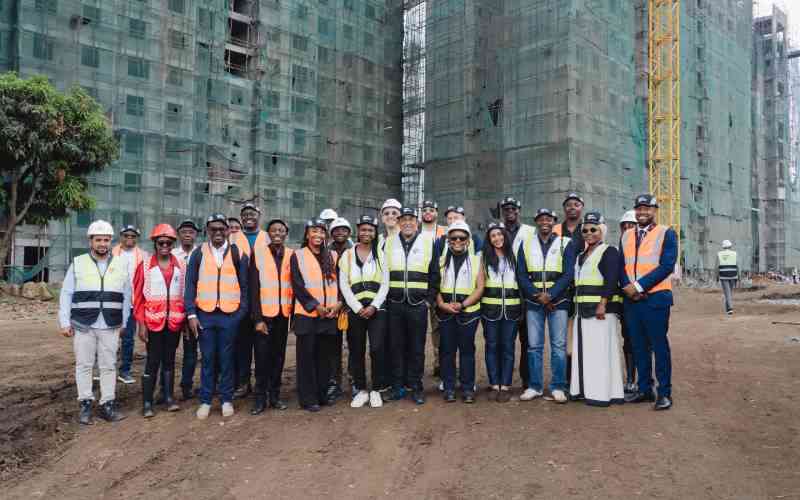
As a result, the sector has improved from a negative growth in 2024 to expand by 6.8 per cent in 2025. A key metric during this period is the increase in the number of units completed by the State Department for Housing and Urban Development, which tripled in the period.
During this period, cement consumption also improved by 20.3 per cent to 10.3 million tonnes, from 8.5 million tonnes in 2024. The 8.5 million tonnes in 2024 was a drop from 9.2 million tonnes in 2023, showing how the 17.5 per cent levy affected the sector.
The Export and Investment Promotion Levy was meant to promote local production of clinker, a key ingredient in cement production.
The result of this levy was a drop in cement production, consumption and loans and advances to the construction sector as the price of cement shot up.
In 2024, the amount of cement clinker imported into the country plummeted by 93 per cent, from 148,018.7 tonnes in 2023 to 10,337.4 tonnes. In the same period, loans and advances to the construction sector dropped to Sh576.3 billion from Sh602.7 billion in 2023.
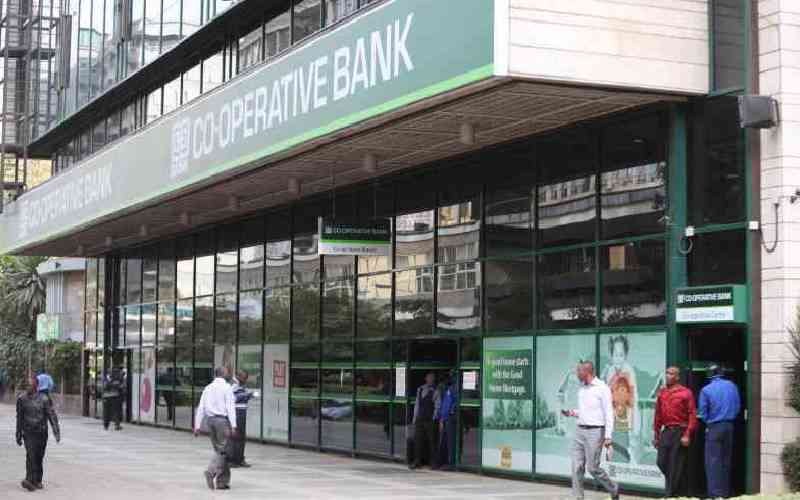
In the latest Economic Survey Report, as published by the Kenya National Bureau of Statistics (KNBS), the loans and advances to the sector improved from Sh576.3 billion to Sh646.5 billion in 2025.
The report states that the highest value of credit was advanced to trade, building, construction and real estate at Sh726.0 billion and Sh647.0 billion, respectively.
Annual inflation
It adds that credit advanced to the financial and insurance sector, as well as building, construction and real estate, grew by 16.2 per cent and 12.2 per cent, respectively as at December 2025.
“Construction industry grew by 6.8 per cent in 2025, recovering from a 0.7 per cent contraction in 2024. The average annual inflation for construction inputs declined to 0.53 per cent in 2025 from 2.83 per cent in 2024,” reads the report.
It adds that employment in the sector recorded growth, with private employment increasing by 2.1 per cent to 228,200 persons in 2025, while public employment increased from 9,900 persons in 2024 to 10,100 in 2025.
“The length of paved roads stood at 25,400 kilometres in 2025, while residential housing units completed by the State Department for Housing and Urban Development more than quadrupled, from 1,655 units in 2024 to 6,738 units in 2025,” the report says.
“In addition, the National Housing Corporation completed 410 housing units valued at Sh941.1 million in 2025.”
Stay informed. Subscribe to our newsletter
The report shows the number of reported building works completed in Nairobi City County increased by 15.1 per cent to 25,090 units in 2025.
“This growth was largely driven by an increase in residential buildings, which rose by 18.2 per cent to 21,187 units in 2025, while non-residential buildings recorded an increase of 0.4 per cent to 3,903 units in 2025,” the report states.
The report explains that the 6.8 per cent recovery in 2025 was largely supported by increased civil works, such as construction and maintenance of roads, coupled with a rise in the construction of residential buildings.
This was seen in the increase of cement consumed in the period, as well as iron and steel. “The volume of imported iron and steel increased by 50.7 per cent while that of imported bitumen expanded by 38.4 per cent to stand at 1.7 million metric tonnes and 92,500 metric tonnes, respectively, in 2025,” the report says.
The growth in construction slightly improved the sector’s contribution to the overall gross domestic product (GDP) to 6.5 per cent from 6.3 per cent in 2024. However, the contribution of the real estate sector to the country’s GDP slightly dropped to 8.2 per cent from 8.4 per cent in 2024. While construction grew by 6.8 per cent in the period, real estate slowed down to 3.9 per cent compared to 5.3 per cent in 2024.
The report states that the Construction Input Price Index (CIPI), which is a quarterly measure of changes in the prices of inputs used in the construction of buildings and civil engineering works over time, indicated an increase in the fourth quarter of 2025.
CIPI looks at prices of inputs such as equipment, labour, transport and fuels. From the breakdown, the index increased from 119.41 in the fourth quarter of 2024 to 120.15 in the fourth quarter of 2025.
“Consequently, year-on-year inflation for the construction sector stoo d at 0.6 per cent in the fourth quarter of 2025, compared to 0.9 per cent in the fourth quarter of 2024.
The average annual inflation declined from 2.8 per cent in 2024 to 0.5 per cent in 2025,” the report says.






Subscribe to our newsletter and stay updated on the latest developments and special offers!






 join
join